
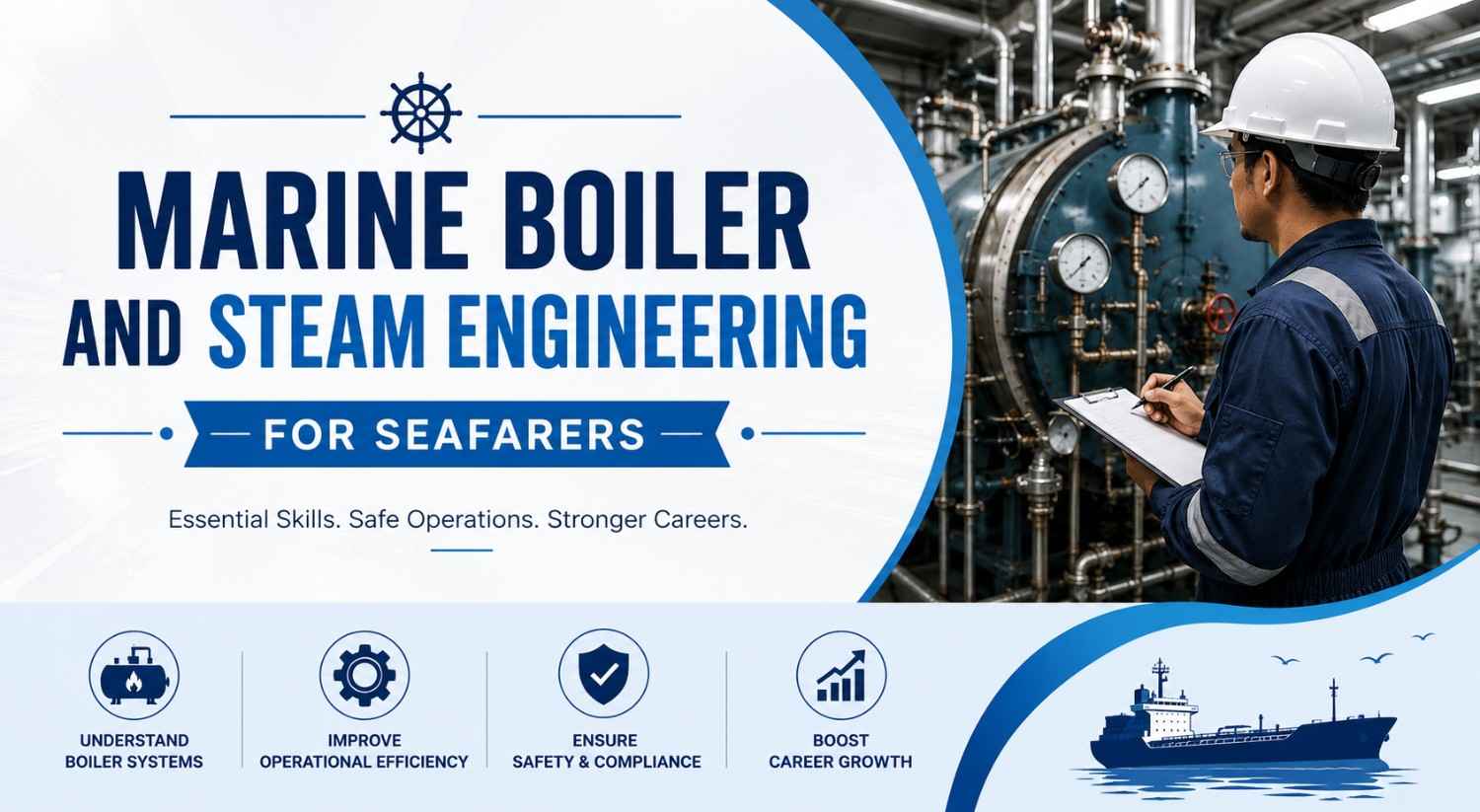
Marine Boiler and Steam Engineering for seafarers is an essential area of knowledge for marine engineers and engine room personnel. Marine boilers play a crucial role in generating steam for various onboard operations, including heating fuel, cargo handling, freshwater generation, and powering auxiliary systems. Understanding how these systems work helps ensure safe ship operations and improves overall vessel efficiency.
Whether you are beginning your maritime career or looking to upgrade your technical skills, learning Marine Boiler and Steam Engineering can strengthen your expertise and create better career opportunities in the shipping industry.
What is Marine Boiler and Steam Engineering?
Marine Boiler and Steam Engineering focuses on the operation, maintenance, and safe handling of marine boilers and steam systems installed onboard ships. These systems generate steam by heating water, which is then used for several essential shipboard functions.
Depending on the vessel, different types of boilers may be installed, such as auxiliary boilers, composite boilers, or exhaust gas boilers. Regardless of the type, proper operation and maintenance are necessary to ensure efficiency and safety.
Why is Marine Boiler Knowledge Important for Seafarers?
Marine boilers operate under high pressure and temperature, making them one of the most critical pieces of machinery onboard. A good understanding of boiler systems enables seafarers to operate equipment safely, identify faults early, and minimize operational downtime.
Knowledge of Marine Boiler and Steam Engineering also helps improve fuel efficiency, supports compliance with maritime safety regulations, and enhances the overall performance of the vessel.
Types of Marine Boilers
Seafarers should be familiar with the common types of marine boilers used onboard ships.
-
Fire Tube Boilers – Commonly used for low-pressure applications and known for their simple design.
-
Water Tube Boilers – Designed for high-pressure steam generation with greater efficiency.
-
Composite Boilers – Utilize both fuel firing and waste heat recovery, reducing fuel consumption.
-
Exhaust Gas Boilers – Recover heat from engine exhaust gases to produce steam, improving energy efficiency.
Each boiler type serves specific operational requirements depending on the vessel.
Key Responsibilities of Engine Room Personnel
Engine room personnel are responsible for ensuring boilers operate safely and efficiently. Their duties include:
-
◈ Monitoring steam pressure and water levels
-
◈ Starting and stopping boiler systems
-
◈ Conducting routine inspections
-
◈ Performing boiler blowdown procedures
-
◈ Checking burner performance
-
◈ Identifying leaks or abnormal conditions
-
◈ Carrying out preventive maintenance
Regular monitoring helps prevent equipment failures and ensures smooth vessel operations.
Common Boiler Problems
Marine boilers require continuous attention to avoid operational issues. Some common problems include:
-
◈ Low water levels
-
◈ Scale formation
-
◈ Corrosion
-
◈ Burner malfunctions
-
◈ Steam leakage
Proper maintenance, water treatment, and regular inspections help reduce these issues and extend the lifespan of the boiler system.
Safety Practices in Marine Boiler Operations
Safety is a fundamental aspect of Marine Boiler and Steam Engineering. Every seafarer should follow standard operating procedures while working with boiler systems.
Important safety practices include:
-
◈ Monitoring pressure and temperature regularly
-
◈ Maintaining proper water quality
-
◈ Testing safety valves periodically
-
◈ Wearing appropriate personal protective equipment (PPE)
-
◈ Following maintenance schedules
-
◈ Reporting any abnormal operating conditions immediately
Following these practices helps minimize risks and ensures safe operations onboard.
Who Should Take a Marine Boiler and Steam Engineering Course?
This course is ideal for:
-
◈ Marine engineering students
-
◈ Junior engine officers
-
◈ Engine cadets
-
◈ Motormen
-
◈ Existing marine engineers
-
◈ Seafarers preparing for competency upgrades
Whether starting your maritime career or aiming for higher responsibilities, specialized training can significantly improve your technical expertise.
Benefits of Learning Marine Boiler and Steam Engineering
Developing expertise in Marine Boiler and Steam Engineering offers several professional advantages. It improves technical knowledge, strengthens problem-solving skills, and increases confidence when working in the engine room.
Some key benefits include:
-
◈ Better understanding of marine steam systems
-
◈ Improved operational efficiency
-
◈ Enhanced safety awareness
-
◈ Greater career opportunities
-
◈ Increased employability within the maritime industry
Shipping companies value professionals who can safely manage critical engine room systems.
Why Choose a Marine Boiler and Steam Engineering Course?
A structured training course provides both theoretical knowledge and practical understanding of boiler operations. Participants learn about boiler construction, steam generation, maintenance procedures, troubleshooting techniques, and safety requirements.
The Marine Boiler and Steam Engineering – Operational Level course at CMC College is designed to equip seafarers with the practical skills and technical knowledge required to handle marine boiler systems confidently. The course helps participants strengthen their operational capabilities while preparing them for real-world engine room responsibilities.
Conclusion
Marine Boiler and Steam Engineering for seafarers is an essential skill that supports safe, efficient, and reliable ship operations. From understanding different boiler types to learning maintenance and safety procedures, this knowledge plays a vital role in every marine engineer's career.
If you are looking to enhance your technical expertise and advance your maritime career, the Marine Boiler and Steam Engineering – Operational Level course at CMC College provides the right foundation to develop the skills required for today's shipping industry.
.png)